What expenses qualify for Medicaid spend down?


Medicaid (which sometimes goes by other names depending on your state) is a government health insurance program that helps low-income Americans pay for medical care. Typically, only people who make under certain income limits can get Medicaid.
However, many states have something called “Medicaid spend down” or the “Medically Needy Program" which lets you qualify for Medicaid by showing that you have high medical expenses.
If you want to apply to Medicaid and make too much income, here’s which expenses count toward Medicaid spend down and how the Medicaid application process works if you’re using this option.
Propel is the #1-rated EBT balance checking app
What is Medicaid spend down?#what-is-medicaid-spend-down
Medicaid spend down is a way to qualify for Medicaid when your income is above the Medicaid limit, but you have high medical bills and need financial assistance.
Under spend down rules, your state will assess your “available income” after medical expenses to see if it meets your state’s Medically Needy income limit. This limit is often lower than traditional income limits. If your available income after subtracting medical expenses is below your state’s Medically Needy income limit, you can qualify for Medicaid.
For example, if you live in California as a single person making $2000 per month, but the Medically Needy income limit is $1400 per month, you can qualify for Medicaid if you have $600 per month in qualifying medical expenses that “spend down” the difference.
You must be able to provide documented proof of your expenses to be approved for Medicaid and requirements vary by state.
What expenses count for Medicaid spend down?
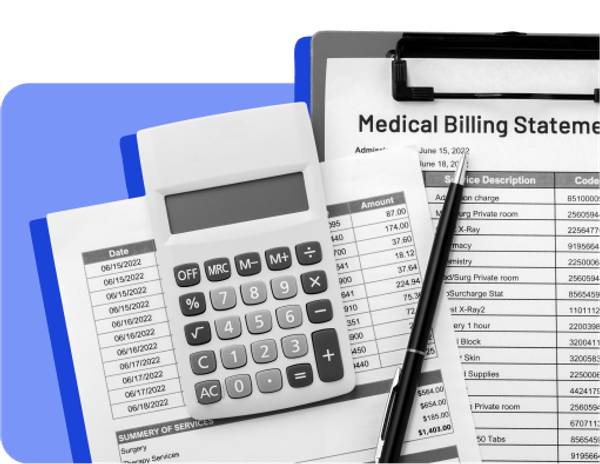
The only types of expenses that qualify for Medicaid spend down are necessary medical, remedial, or health-related expenses.
The exact types of health-related expenses that count may be vary depending on where you live because states have different rules.
Expenses paid by grants, insurance, and other programs never count towards Medicaid spend down. You must be able to show that you or your household paid out of pocket for the expenses, or that you have unpaid medical bills in your name for them.
Common expenses that may count for Medicaid spend down in your state include:
- Doctor visits and medical appointments for primary care, specialty visits, health clinics, and other outpatient services
- Diagnostic or routine testing such as lab work, X-rays, CT scans, ultrasounds, and MRIs
- Hospital visits and emergency room care
- Prescription medications and over the counter (OTC) medications if they are prescribed or recommended by a doctor in writing (rules may be different depending on your state)
- Health insurance premiums for employer plans, private insurance, or Medicare if you’re a dual enrollee, as well as long-term care insurance and vision and dental coverage
- Copays, deductibles, and coinsurance
- Dental care and orthodontics (usually only if medically necessary)
- Vision and eye care, like exams, eyeglasses, contacts, lens solutions, and eye disease treatments
- Hearing aids
- Durable medical equipment like wheelchairs, walkers, oxygen tanks, CPAP, diabetic supplies, and more (this is one of the largest coverage areas)
- Therapies including physical, occupational, speech, behavioral, mental health counseling, substance use treatment, and more
- Home and community-based services like personal care services, in-home aid, skilled nursing, respite care, and adult day programs (varies by state)
- Long-term care services (LTSS) like nursing homes, assisted living, memory care, and PACE
- Transportation for health-related travel like mileage / gas, taxis, uber, parking, and tolls, (you may need to provide a statement from your doctor to prove necessity)
- Unpaid past medical bills (in the applicant’s name)
- Medical items for children with disabilities, like sensory equipment, medical nutrition, diapers beyond typical age, special car seats, and safety equipment
- Medical devices and repairs
- Care provided by family (strict and state-specific rules)
- Other expenses that might qualify include medical alert devices, interpreter services, case management fees, guardian fees for medical decision-making, and medically necessary home modifications
To get an exact list of which medical expenses qualify for spend down in your state, look for your state’s Medicaid Eligibility Manual, which usually includes a list of covered services.
States have different names for this document, so call your local Medicaid office and ask for “a state list of medical and remedial services.”
Who can use Medicaid spend down?#who-can-use-medicaid-spend-down
Not everyone can qualify for Medicaid through spend down. The spend down option, officially called the Medically Needy Program, depends on two things:
1. Where you live#1-where-you-live
Only states that run a Medically Needy Program allow spend down. If your state does not have this program, you cannot use spend down to qualify for Medicaid.
States that do not have a Medically Needy option include Alabama, Alaska, Arizona, Colorado, Delaware, Idaho, Indiana, Mississippi, Missouri, Nevada, New Mexico, Ohio, Oklahoma, Oregon, South Carolina, South Dakota, and Wyoming. Every other state and D.C. has some kind of Medically Needy option.
2. Your eligibility category#2-your-eligibility-category
Even in states that offer Medicaid spend down, not everyone can use it. States choose which groups can qualify through this pathway.
Typically, spend down is available to:
- Children
- Pregnant people
- Parents or caretaker relatives
- Adults who are 65 and over, blind, disabled, or have certain chronic health conditions
Spend down is not available to adults aged 19 to 64 who are not part of the groups above. If you are an adult who is not a parent, caregiver, or person with a disability, you cannot use medical expenses to lower your income to qualify for Medicaid.
How to apply for the Medicaid Medically Needy Program with spend down#how-to-apply-for-the-medicaid-medically-needy-program-with-spend-down
If you want to apply for Medicaid through spend down, you need to start by checking if your state has a program that you can participate in.
Call your local Medicaid office and ask whether your state offers a spend down or Medically Needy program. If the answer is yes, you will likely need to apply for Medicaid just like anyone else:
- Apply for Medicaid through your state’s Medicaid office: You can apply for Medicaid online, by phone, by mail, or in person, depending on your state
- Submit proof of income and assets: Provide pay stubs, Social Security statements, pension income, or other income and asset documents
- Provide documentation of medical expenses: Upload or bring proof of current medical bills, old unpaid medical bills (if your state allows them), prescription receipts, health insurance premiums, copays, deductibles, statements from doctors or providers, or other proof of medical expenses
Once you’re approved, make sure you keep detailed records of your medical expenses going forward.
Most states require you to recertify your spend down eligibility at least every six months, but some states review expenses more often.