


Lasting impact: SNAP households during and after the shutdown
Our editorial promise
All of our Propel editorial content meets our high bar for accuracy, timeliness, trust, and relevance. Our pages are edited and fact-checked to make sure we meet our mission of giving you information you can rely on.
Learn more about our editorial standards.
People have to play catch up and work twice as hard to make up what we lost.
– Propel user, KY
Key Findings
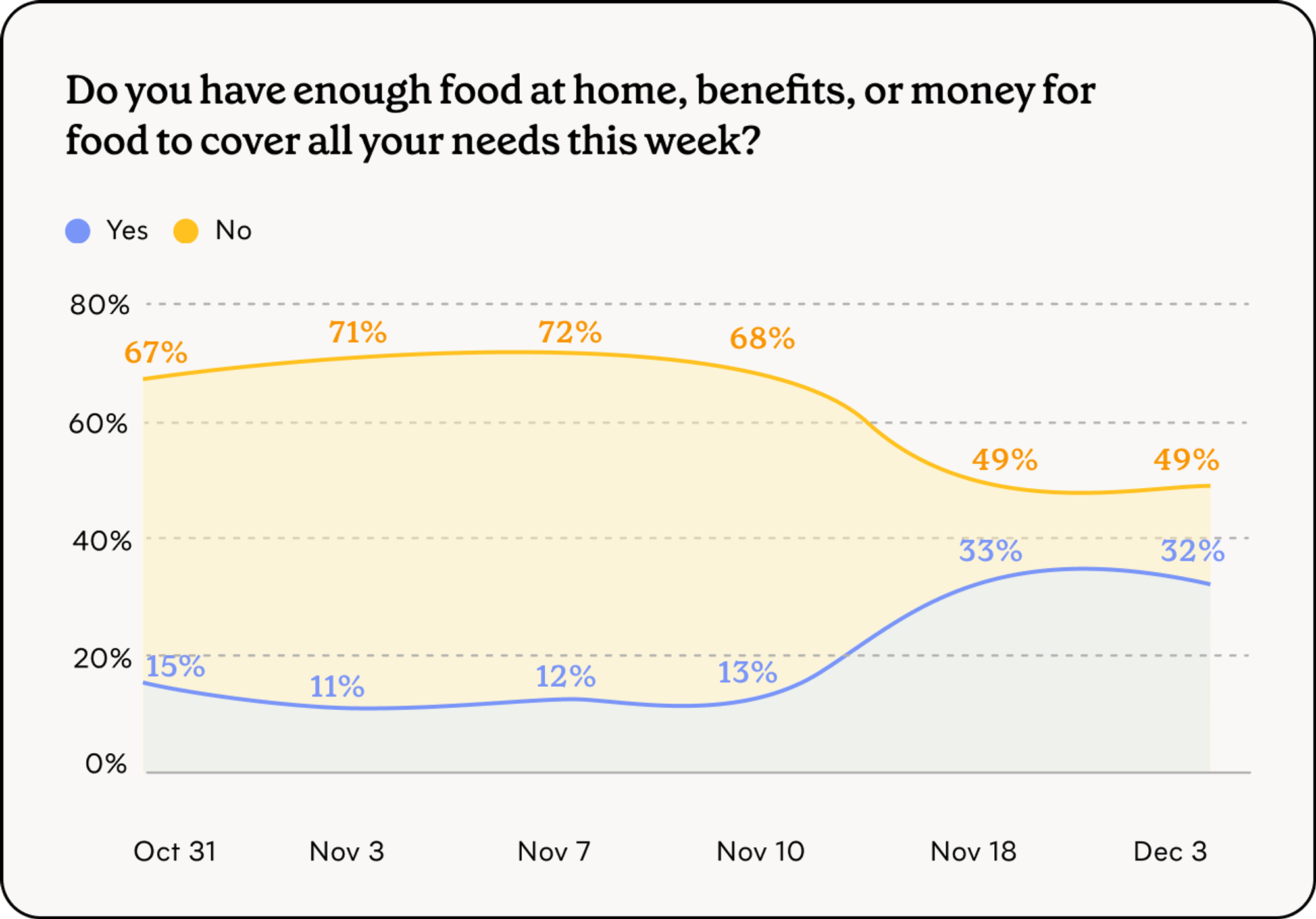
- As November SNAP deposits were delayed, 72% of survey respondents said they did not have enough food or money to meet basic needs.
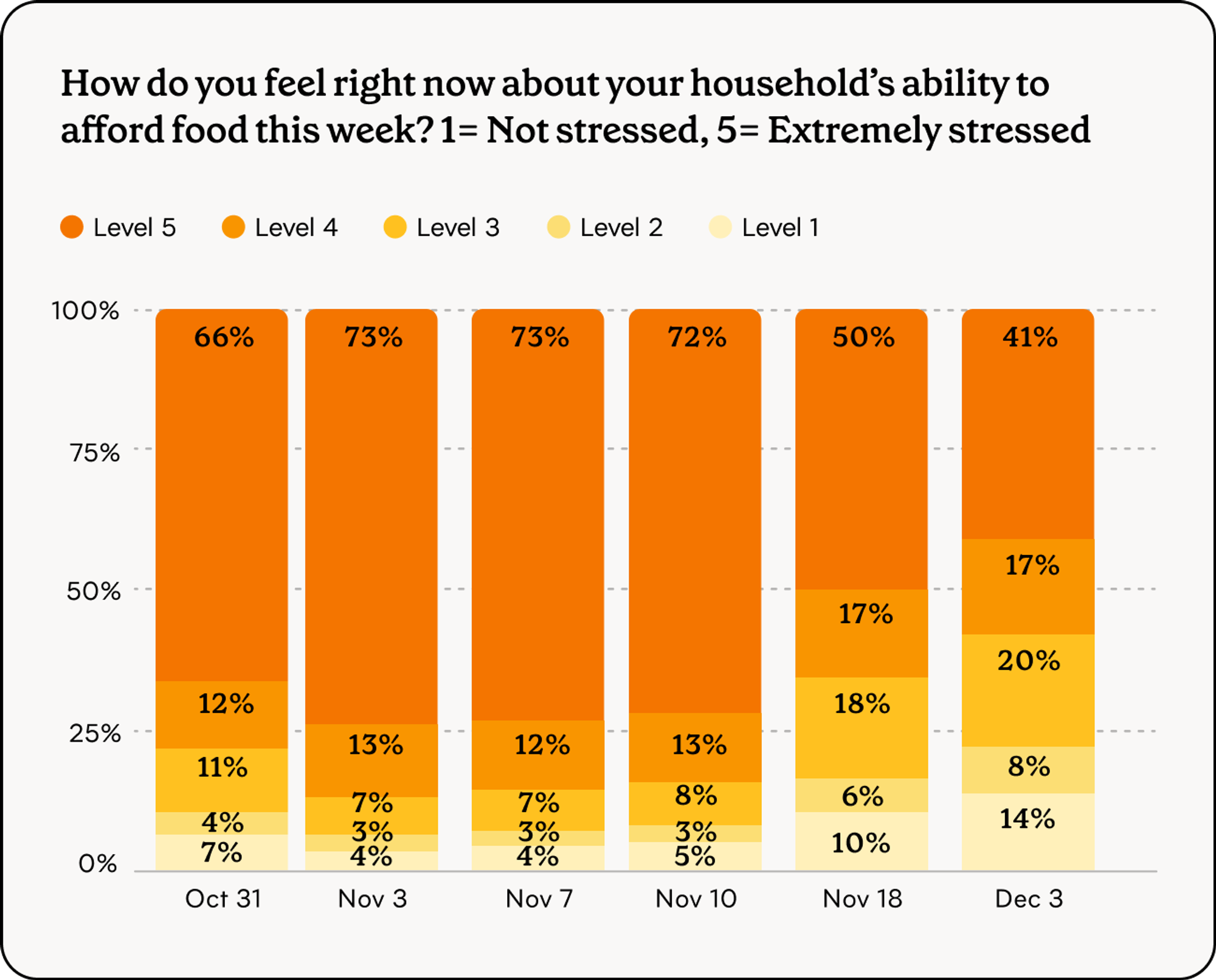
- Nearly three-quarters of respondents reported the highest possible stress level before benefits were finally restored.
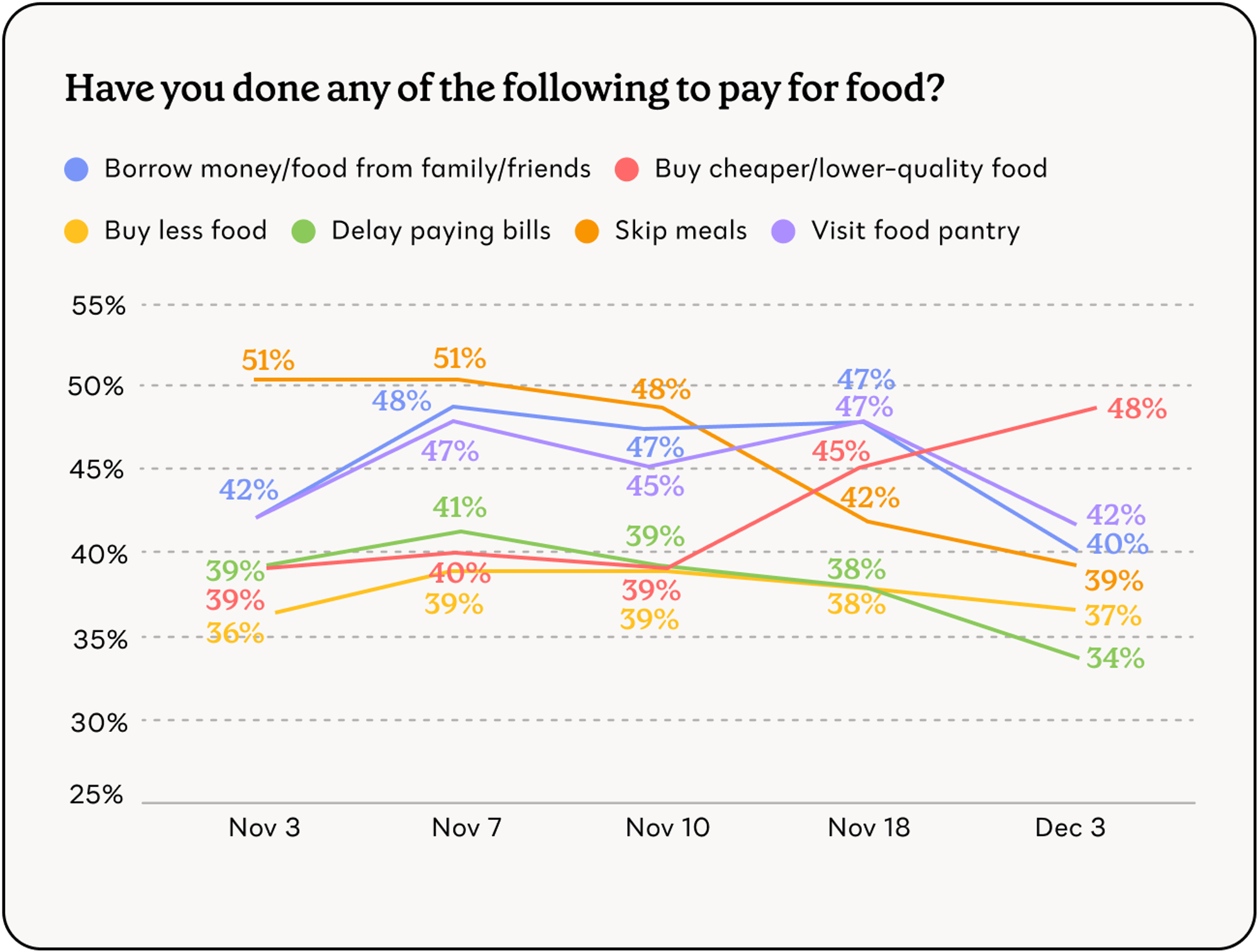
- Reliance on cheaper or lower-quality food rose sharply in November and remained elevated into December.
- Propel became a trusted source of information and support during the shutdown – reaching more than 5 million users in-app and helping deliver $12 million in direct relief to over 238,000 families through our partnership with GiveDirectly.
When the government shutdown stretched into November, millions of SNAP households went more than two weeks without benefits. For families already struggling to make their food budgets last the full month, the delay created a massive shock – one that pushed many into empty pantries, maxed-out credit, and impossible trade-offs.
Between October 31 and December 4, Propel surveyed more than 8,900 SNAP households to learn what they experienced during this period. Their responses tell a clear story: the stress was overwhelming, the sacrifices were severe, and the ripple effects are still being felt as we head into the holiday season.
Most households were unprepared for a delay in benefits#most-households-were-unprepared-for-a-delay-in-benefits
As SNAP benefits began to lapse in early November, 72% of respondents said they did not have enough food, benefits, or money to meet their basic needs. At the same time, 81% of respondents reported being unable to prepare for the possibility of another week of delayed SNAP deposits. After November benefits finally arrived, the percentage of respondents who said they did not have enough resources fell to 49% – still a high percentage, but significantly lower thanks to the restoration of SNAP benefits.
The delays significantly impacted my holiday plans. I had to cut back almost everything and change most of my plans.
– Propel user, NJ
High stress levels accompanied SNAP deposit delays#high-stress-levels-accompanied-snap-deposit-delays
By early November, nearly three out of four households reported experiencing the highest possible stress level about their ability to afford food. Stress levels eased significantly once benefits were restored, illustrating just how important SNAP is to households’ wellbeing.
It has been stressful and not knowing what's going to happen in the near future doesn't make it any better but I am trying my best to stay positive and keep my kids fed and healthy during this time.
– Samantha, MI
Families made painful trade-offs to help bridge the gap#families-made-painful-trade-offs-to-help-bridge-the-gap
Across Propel’s surveys, respondents shared the everyday sacrifices they made while waiting for benefits. In many cases, these sacrifices continue into December:
- 40-51% skipped meals in the month they were surveyed.
- 40-48% borrowed money or food from friends or family.
- 34-41% delayed paying essential bills to try to keep food on the table.
- 36-48% bought lower-quality food or simply bought less.
Each of these decisions had its own set of consequences for SNAP families. Skipping meals can harm health; borrowing money creates debt and strains relationships; delaying essential bills leads to late fees, mounting balances, and risks of shutoffs or eviction; and buying cheaper or less food means compromising nutrition. These cascading impacts often don’t end when benefits arrive – they echo into the weeks and months that follow, leaving families further behind even after the shutdown is over.
The shutdown put everything on pause and now I'm playing catch up with everything. I had to use money set aside for bills to buy groceries and I am now having to pay penalties for being late.
– Teresa, FL
Food pantries carried a heavy load as federal support faltered#food-pantries-carried-a-heavy-load-as-federal-support-faltered
Food pantries and community organizations became more of a lifeline during the shutdown then they were already. Our surveys showed that as many as 47% of households reported visiting a food pantry to get through the shutdown, a percentage that remained high even after the shutdown ended. For comparison, our household pulse survey from August showed that 32% of households visited a food pantry in the prior month.
These organizations absorbed a surge in demand at the exact moment federal support was lacking – a reminder that the hidden safety net behind the safety net is often strained but essential.
Having 5 children and being let go of my last job, this is very stressful. We have been counting on our local pantries and close family members for help through this time.
– Propel user, NY
How Propel stepped up for SNAP families#how-propel-stepped-up-for-snap-families
During the shutdown, when policy whiplash and partisan headlines left SNAP households unsure where to turn, Propel focused on one simple goal: reduce uncertainty and help families bridge the financial gap between their October and November benefits.
We tracked every credible update in real-time, refreshed the home screen and Benefits Hub with the latest state-specific information, and sent timely push and email alerts to make sure families knew exactly what was happening with their benefits. More than 5.3 million users saw these updates in the app, and 81,000 read our October shutdown explainer. That clarity made a difference: Propel users were twice as likely as non-users to report feeling “extremely informed” about what to expect during the shutdown.
When it became clear that families were beginning to miss their November deposits, we partnered with GiveDirectly to move cash quickly to those most affected. Powered by Propel’s data and deep connection to our users, we identified high-need households and helped raise $12 million in relief – supporting 238,153 families and funding more than 4.3 million meals.
SNAP is an irreplaceable support#snap-is-an-irreplaceable-support
The extreme stress, deprivation, and lasting consequences of the November SNAP deposit delay point toward an undeniable fact – SNAP is a critical, irreplaceable program that plays a foundational role in the financial, nutritional, and social fabric of the lives of tens of millions of people. While the impacts of the November deposit delay will linger, SNAP recipients can take some comfort knowing that the program is fully funded through the end of September 2026.