What is the Earned Income Tax Credit (EITC)?
Our editorial promise
All of our Propel editorial content meets our high bar for accuracy, timeliness, trust, and relevance. Our pages are edited and fact-checked to make sure we meet our mission of giving you information you can rely on.
Learn more about our editorial standards.

At a glance
- The EITC is a refundable tax credit for workers with low to moderate income.
- The amount you qualify for will depend on your income and how many qualifying children you have.
- Claiming the EITC usually doesn’t affect SNAP or any other benefit programs.
If you work—even part-time or for yourself—and have a low or moderate income, you may qualify for the Earned Income Tax Credit (EITC) and be able to save some money. The EITC is a refundable tax credit designed to support working individuals and families.
It can reduce the amount of federal taxes you owe or increase your refund amount once you file your taxes. Eligibility and how much you are allowed will depend on your income, filing status, and whether you have kids.
Here's how the Earned Income Tax Credit works.
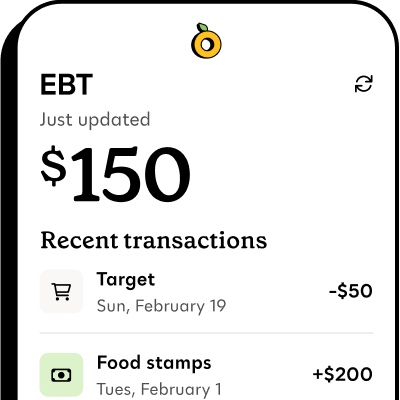
Propel is the #1-rated EBT balance checking app
Who qualifies for the Earned Income Tax Credit?#who-qualifies-for-the-earned-income-tax-credit
To qualify for the Earned Income Tax Credit, you generally must meet all of the following:
- You worked and earned income during the year
- Your income is below the EITC income limits for your filing status and family size
- You have a valid Social Security Number
- You are not filing as “married filing separately” (limited exception if you lived apart from your spouse for part of the year and have a qualifying child)
To get the EITC for tax year 2025, your income must generally be below:
- $61,555 ($68,675 if married filing jointly) for people with three or more children
- $57,310 ($64,430 if married filing jointly) for people with two children
- $50,434 ($57,554 if married filing jointly) for people with one child
- $19,104 ($26,214 if married filing jointly) for people with no qualifying children
If you don't meet one of these requirements, you likely won’t qualify for the credit. There are also a few additional rules (for example, age limits if you don’t have children).
Not sure whether you qualify? The IRS has a free online EITC Assistant that can help you check.
What counts as earned income for the EITC?#what-counts-as-earned-income-for-the-eitc
Earned income is the money you make from working. This can include wages, salaries, tips, or income from your own business or farm.
Examples of earned income can include:
- Wages, salaries, or tips
- Income from self-employment or freelance work, including gig economy jobs
- Certain disability benefits
Some income does not count toward the EITC, such as:
- Social Security benefits
- Unemployment benefits
- Pensions or annuities
- Interest and dividends
- Alimony or child support
What is a “qualifying child” for the EITC?#what-is-a-qualifying-child-for-the-eitc
A qualifying child is a child with a valid Social Security Number who meets certain rules for the Earned Income Tax Credit. These rules decide whether a child can count toward your credit. Only one person can claim a child as a qualifying child for the EITC.
A child must meet all of these requirements:
- Relationship: The child can be your son, daughter, stepchild, adopted child, foster child, sibling, stepsibling, grandchild, niece, or nephew.
- Age: The child must be under 19 at the end of the year, under 24 if they’re a full-time student, or any age if they’re considered permanently and totally disabled.
- Residency: The child must live with you in the U.S. for more than half the year. Temporary absences, like school or medical care, usually count.
- Joint return: The child cannot file a joint tax return for the year unless it’s only to claim a refund.
If a child doesn’t meet these rules, they are not considered a qualifying child for the EITC. For example:
- A child who didn’t live with you most of the year
- A child who filed a joint return with a spouse (just to report income)
- A relative who doesn’t meet the relationship test
Even without a qualifying child, you can still claim the EITC, as long as you meet income and other requirements.
How much is the Earned Income Tax Credit?#how-much-is-the-earned-income-tax-credit
The amount of your EITC depends on how much you earned during the year and how many qualifying children you have.
In general:
- People without children qualify for a smaller credit amount
- People with one or more qualifying children can qualify for a larger amount
The maximum credit amounts for the 2025 tax year are:
- No qualifying children: $649
- 1 qualifying child: $4,328
- 2 qualifying children: $7,152
- 3 or more qualifying children: $8,046
Your actual tax credit may be lower depending on your income, and it goes down if your income gets too high.
How do state Earned Income Tax Credits work?#how-do-state-earned-income-tax-credits-work
Some states offer their own version of the Earned Income Tax Credit in addition to the federal EITC. These state credits often follow the same rules as the federal credit, but can vary in how much you get, income limits, and eligibility.
For example, one key difference is that an Individual Taxpayer Identification Number (ITIN) does not qualify for the federal EITC because you and any qualifying children must have a valid Social Security Number. But some states, like California, offer credits like the CalEITC that ITIN holders can claim.
Most state EITCs are refundable, but in Missouri, Ohio, South Carolina, and Utah, credits are currently nonrefundable. That means that in those states, the EITC won’t give you a refund if the credit is larger than your state tax bill.
How do I claim the Earned Income Tax Credit?#how-do-i-claim-the-earned-income-tax-credit
You claim the Earned Income Tax Credit by filing a federal tax return. Even if you don’t usually file taxes, you still need to file to get the credit.
You’ll need to file Form 1040 (or 1040-SR), and if you’re claiming a qualifying child, you’ll also need to complete and attach Schedule EIC with your tax return. Many low or moderate-income Americans, including SNAP recipients, can file for free.
Before you file, gather documents that show your income, like a W-2 or 1099, and have Social Security Numbers ready for you, your spouse, and any qualifying children.
Does claiming EITC affect SNAP or other benefits?#does-claiming-eitc-affect-snap-or-other-benefits
In most cases, claiming the EITC does not affect your SNAP benefits or other government benefits.
Federal law says that EITC refunds cannot be counted as income when determining eligibility for SNAP, Medicaid, housing assistance, TANF, and other need-based assistance.
If you save part of your refund for longer than a year, it could eventually count as an asset for some programs. Because benefit rules can vary by program and state, it’s always a good idea to check with your local benefits office if you’re unsure.
What if you don’t qualify for the EITC?#what-if-you-dont-qualify-for-the-eitc
Not qualifying for the Earned Income Tax Credit doesn’t mean you’re out of options. There are other tax credits and benefits you may still be eligible for, depending on your situation.
For example, you might qualify for the Child Tax Credit, Credit for Other Dependents, or state-level tax credits. And you can still get other public assistance, like SNAP and Medicaid.
You can check what other credits or benefits you may qualify for by filing a tax return or using free tax help. Even if you don’t qualify for the EITC, it’s often worth filing to see what you might be eligible for.