What does self-attestation mean for SNAP?
Our editorial promise
All of our Propel editorial content meets our high bar for accuracy, timeliness, trust, and relevance. Our pages are edited and fact-checked to make sure we meet our mission of giving you information you can rely on.
Learn more about our editorial standards.


Additional expert review by
Table of contents
At a glance
- Self-attestation means you can share information with the SNAP office without needing to provide extra documents.
- Some states allow self-attestation for things like housing costs, child care, and household details, but others require more documentation.
- If the rules have changed in your state, you may need to submit proof during application or renewal and respond to requests on time to avoid delays.
When you apply for SNAP (also called food stamps) or renew your benefits, you may hear the term “self-attestation.” This just means you can tell your state SNAP office that the information you provided is correct without needing to have official documents showing proof for things like housing costs, household information, child care expenses, and other factors that affect your SNAP eligibility.
Depending on where you live, the rules around self-attestation may have changed since the last time you renewed or applied for SNAP benefits. Here’s what that means for your benefits.
Propel is the #1-rated EBT balance checking app
How does self-attestation work when applying for SNAP?#how-does-self-attestation-work-when-applying-for-snap
During the application process, you’ll need to provide information about your household and income. Depending on your state’s rules, you may be able to self-attest certain information. This means your caseworker will accept written or verbal statements as a legal declaration in place of official documents.
In some cases, your caseworker may also verify information using government databases, such as income records or enrollment in other public assistance programs. However, if any information you provide is inconsistent or questionable, your caseworker can still ask you to submit additional documents to verify your eligibility.
Information that may be eligible for self-attestation includes:
- Housing costs, like how much you spend per month on rent, mortgage payments, or utility expenses
- Household information, including who lives with you
- College student status or eligibility for a student exemption
- Medical expenses for older adults and people with disabilities (you can generally self-attest these expenses, but you may need to provide proof of the expense to receive the standard medical deduction)
- Child care or dependent care expenses
- Self-employment income and business expenses
- Whether you currently have no income (this is sometimes called zero income)
- Reasons you may be exempt from SNAP work requirements
Information that is generally not eligible for self-attestation includes:
- Identity
- Immigration status
- Social Security numbers (you may not need to provide a physical Social Security card, if your caseworker can verify the number through available systems)
- Certain income information
You may be asked to sign a form or confirm your answers during a SNAP interview. Self-attestation is considered a legal statement, so it’s important to report changes or corrections if something is wrong.
How does self-attestation work when renewing SNAP benefits?#how-does-self-attestation-work-when-renewing-snap-benefits
Your state will periodically review your SNAP case to make sure you still qualify and that your benefit amount is correct. This process is called recertification or renewal.
During SNAP renewal, you’ll need to confirm information about your household, income, and expenses. Depending on your state’s rules, you may be able to self-attest some of this information.
For example, you may be able to self-attest:
- Who is in your SNAP household
- Whether your income has changed
- Whether your expenses have changed
Even when self-attestation is allowed, your SNAP office may still request documents if it needs additional verification. Responding promptly to any requests can help prevent delays or interruptions to your benefits.
What does it mean if my state removes self-attestation for SNAP?#what-does-it-mean-if-my-state-removes-self-attestation-for-snap
Some states now require proof for information that you may have been able to self-attest before. For example, you may now be asked to provide documents to verify things like rent or utility costs, even if you’ve previously confirmed them with a verbal statement.
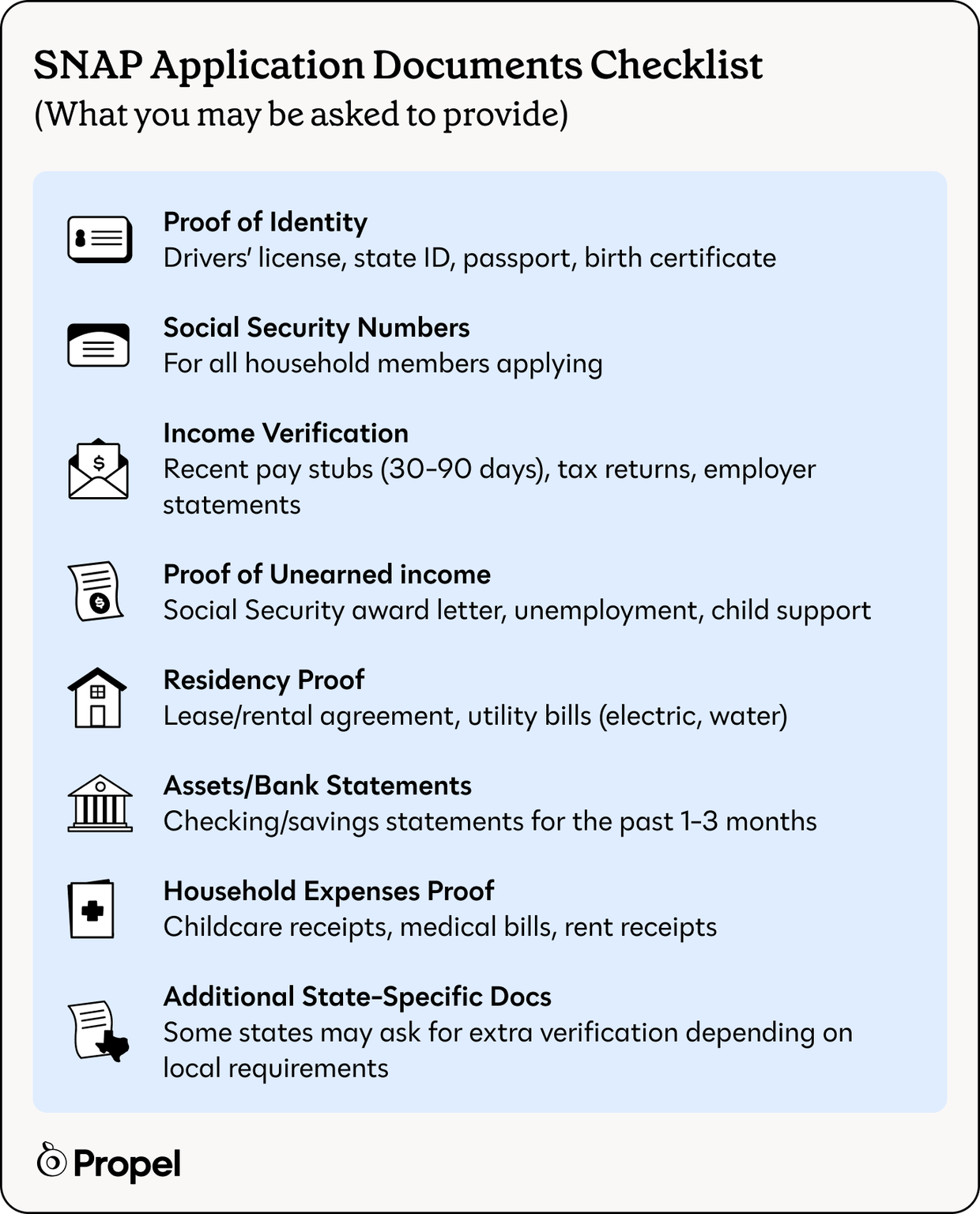
If your state removes self-attestation, it does not mean you will automatically lose SNAP benefits. It means you will now need to provide documents like:
- Pay stubs or income statements
- Rent or utility bills
- Child care receipts
- Other proof requested by your SNAP office
Your SNAP office should tell you what documents are needed and when they are due.
Why are some states removing self-attestation?#why-are-some-states-removing-self-attestation
States may change their SNAP verification rules to make sure the right amount of benefits is going to households that meet current SNAP requirements.
Changes can happen because states update their procedures, respond to federal guidance, or adjust how they review SNAP applications and renewals.
What should I do if my state no longer accepts self-attestation?#what-should-i-do-if-my-state-no-longer-accepts-self-attestation
If your state changes how it handles self-attestation (or if you’re not sure what the rules are), be prepared to provide more documents during your SNAP application or renewal than you have in the past.
To help avoid delays or interruptions in your benefits, you can:
- Read your SNAP notices carefully so you know what’s being requested.
- Submit any required documents by the deadline.
- Keep copies of anything you send in for your records.
- Reach out to your SNAP office if you’re not sure what proof is needed.
- Use the Propel app to keep track of your benefits and be notified of any missed deposits.

Balance your grocery budget and get access to deals with Propel
If your SNAP application or renewal is denied, you may be able to reapply or appeal the decision, depending on your situation.
If you need help understanding your options or challenging a decision, you can contact your local legal aid organization for free or low-cost support.